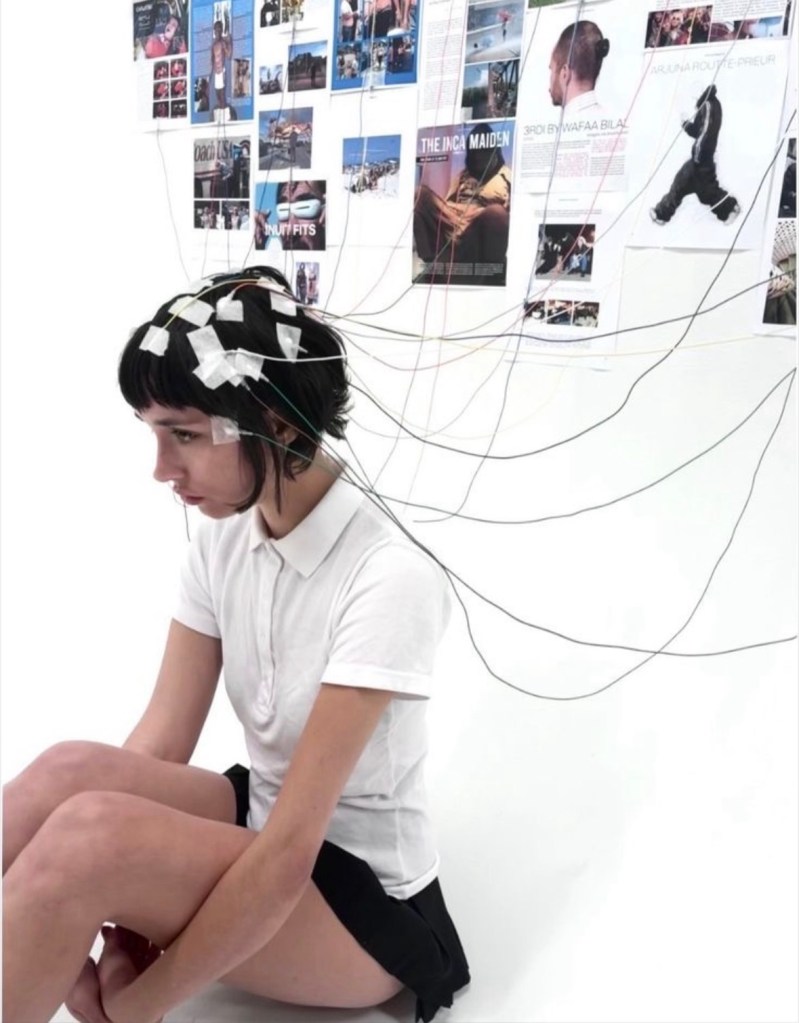
Recently, I rewatched an old favourite of mine, Fear and Loathing in Las Vegas. This time, after watching the movie, something different stuck with me for reasons other than the shock value and hilarious antics of Raoul Duke and Dr Gonzo. I was ruminating on the sheer overindulgence in drug use, but not for reasons of critique or some sense of moral superiority. Instead, it occurred to me that as a culture, we are doing the exact same thing, but instead of LSD and pot, it is technology and information. We are so beyond intoxicated from our devices and information sharing that we are going catatonic. We are, as it seems to me, willingly and positively thrilled to be walking in this direction of total inebriation and degeneration. So, what can Fear and Loathing in Las Vegas offer us as an insight into excess and decadence? How can we sober up from our technological high? Let us ride alongside this brilliant movie from the late 90s and find out.
Before I give an ear-beating on our obsession with technology, I first want to illustrate what ‘excess’ is, what Fear and Loathing gets right, and how this relates to decadence and degeneration. One thing I admire about Fear and Loathing is its tremendous portrayal of excess. Excess is a surplus, more things than necessary, but it is also more than that. Excess is not just about having a lot; it is when experience stops meaning anything. Excess is not about how much we consume, but what that consumption does to our brains while we experience it. For example, one cup of coffee and I am feeling fired up, two cups and I am getting a little paranoid, five cups and I’m flatlining. Essentially, there is a point at which intensity no longer heightens experience but actually erodes it. You could also think about it this way: silence makes sound meaningful; conversely, when everything is loud, nothing stands out. In Fear and Loathing, the constant substance use initially heightened the sensory experience, but inevitably, as they kept ingesting, they sank into sensory chaos. Their reality became unstable and overwhelmed by the drugs they voluntarily consumed. The lesson here is that excess does not expand experience; it dulls it. The world experienced by Duke and Dr Gonzo becomes a blur of sensations, none of which can fully register at once.
Sad to say, this same logic does not end with drugs; it only changes form. Enter social media. All day, every day, whenever I pull out my phone, there is some stream of data that proceeds to vomit information all down my wrist and onto my lap. Irrespective of whether I wanted that information in the first place, it does not matter anymore. In 2026, we inhabit the age of data excess, and everyone carries the means to get high in their pockets. But what does Fear and Loathing have to do with our information overload? Unsurprisingly, a lot. When I watch Fear and Loathing, the excess is so unapologetic, so in your face, and at times confronting that it punctuates the film. In between Duke and Dr Gonzo blasting themselves with substances, the audience has a moment to catch their breath before being submerged back into a drug-induced frenzy. In Dr Gonzo’s world, there are peaks and troughs to his excess, and we get to watch each chaotic peak play out fully. Importantly, though, there is always a return to baseline. I believe that this is a luxury only they can enjoy.
In our world, we don’t have the privilege of experiencing dips in our access to technology. Social media was carefully constructed over a period of years, and there is no going back. It is the same with AI; the genie is out of the bottle, and there is no chance of stuffing it back in there. In our world, excess is constant and embraced; there is no loss, only connectivity. The widespread nature of technology is like a low-volume background hum that rings out permanently. Unlike Fear and Loathing with its bursts of drug-fuelled highs, our technology excess is quiet, habitual, embedded into everyday life, and encouraged and incentivised. In many ways, our information overload has become a kind of heroin. A state of bliss that is maintained by shooting up reels directly into our brains. When I reflect on how I feel while scrolling, it is like I am sinking into a sticky ooze that pulls me into the murky waters of the underworld. One thing is clear: we are not lacking information; we are lacking the ability to experience it fully. Our experience of the world is dulling and flattening through our overexposure to technology.
It follows, then, that we have become more intoxicated than the ridiculous drug benders undertaken by Duke and Dr Gonzo. Fear and Loathing shows us excess in plain sight and with bright colours, but the chaos is separated by moments of reprieve and finally the finishing of the journey to Las Vegas. Conversely, our society has interwoven our obsession with technology into every waking moment. This produces possibly the slowest form of degeneration I have ever witnessed; it is down to each passing frame of experience. This is not hidden either; it is sold to us, and we happily consume to maintain our fix. These are the thoughts that Fear and Loathing left me with. This film and Hunter S. Thompson, the author of the original book, did a fantastic job of capturing modern decadence. If you swap out the drugs for technology, you realise we are much closer to total inebriation than even Duke and Dr Gonzo themselves.
That begs the question: how can we sober up from this techno-fent fold? I think re-engaging with the senses is our version of Narcan. Exercise your will and keep technology at a manageable distance. Watch a movie without your phone in the room. Dare I say, try to return to nature and to default reality. If we can prevent saturating our senses and reality with technology and information, then maybe we can sober up from this bizarre new second-hand experiencing of reality. In the meantime, I am going to try to chase this technology comedown.
Seriously, if you haven’t watched Fear and Loathing in Las Vegas, do yourself a favour.
 psyched sundays